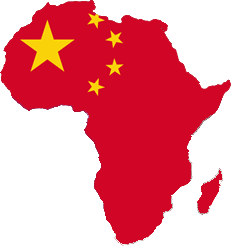
China has had a long history of trade links and diplomatic
relations with Africa and the Global South. However, modern political and
economic ties only began during the Mao era. During the 1960’s there was a
national liberalisation movement in Africa where the Chinese government sent
experts abroad to promote the revolution. After the cold war ended, Africa
became ever more important for China to increase trade since the Chinese needed
to look towards countries other than USSR and US for natural resources that
they required for industrialisation. On the other hand, Western countries
during this period did not consider African countries of being important
strategically. By the time of 2007, there were more than 750,000 Chinese
nationals working in various African countries. Trade between the two countries
has increased by approximately 700% since the 1990s and now, China is Africa’s
third largest trading partner.
It can be seen that the opening up of China and the recent development of
Chinese-African trade relationship has caused China to be an increasing
influence on Africa’s current political and economic atmosphere. As a result,
this has caused many people to question whether or not China is just still
acting in its old ways, generating imperialist power and exploiting others.
Imperialism is defined as “the policy of extending the rule or
authority of an empire or nation over foreign countries, or of acquiring and
holding colonies and dependencies”.
Furthermore exploitation is defined as “the fact of
making use of a situation to gain unfair advantage for oneself”. We can discuss whether or not China is just
another imperialist power exploiting Africa’s resources based on these
definitions.
 It could be argued at China is indeed acting in an exploitative
and extractive manner towards African countries where Chinese businesses are
not working in partnership with African businesses, but in fact, in competition
with them. From various research on international competitiveness of African
goods and businesses, it is shown that African businesses are less efficient
due to the lack of foreign capital, limited resources and inadequately educated
workers.
As a result, the increasing presence of more competitive Chinese firms is
driving incumbent African business out of business. This can be seen in
Africa’s textile industry which has dramatically deteriorated since the rise of
power of Chinese firms within African countries.
It could be argued at China is indeed acting in an exploitative
and extractive manner towards African countries where Chinese businesses are
not working in partnership with African businesses, but in fact, in competition
with them. From various research on international competitiveness of African
goods and businesses, it is shown that African businesses are less efficient
due to the lack of foreign capital, limited resources and inadequately educated
workers.
As a result, the increasing presence of more competitive Chinese firms is
driving incumbent African business out of business. This can be seen in
Africa’s textile industry which has dramatically deteriorated since the rise of
power of Chinese firms within African countries.
So is this a fair result? The answer appears unlikely, since there
is a clear unequal balance of power between the Chinese and African countries,
which suggests an imperialist act is occurring. We can turn towards some
evidence of this behaviour to help us understand why this might be the case.
Firstly, export taxes placed on African goods from China is very low for raw
materials but extraordinarily high for manufactured goods, which discourages
African businesses to take on the next stage of production of their goods since
it is unlikely that they would be able to make a lot of profit from it. As a
result, this de-values the goods that they produce and Chinese businesses who
do manufacture the goods will be able to make a larger amount of profit. This
case can be seen clearly for coffee beans and petroleum. Consequently, it can
be seen that Chinese businesses have an unfair advantage due to the high tariff
rates that are placed on certain African products.
Furthermore, the “no strings attached” and “non-interference” concepts
of Chinese trade policies and political agenda is questionable. It appears that
although the government intend for these types of agreements, they are unlikely
to be put into action, as a result the Chinese is acting in an imperialist
manner, where they are indeed trying to extend their power and rule over Africa
and its resources. For example, in the past, one of the conditions for trading
with the Chinese was for the country to recognise that Taiwan is not a country
in its own right. Furthermore, aid was given to Africa on the condition that
certain business contracts were given to Chinese businesses. Not only that, the
concept of Chinese non-inference has been violated, since interfering with
African countries’ economics will undoubtedly result in the interference of
politics. For example, in 2008, Chinese policy was softened to encourage Sudan
to allow peacekeepers into their country. This was to show that China’s push to
become a responsible economic player during the 2008 Olympics. As a result,
trade is always interlinked with politics, and even though China may not
necessarily state explicitly that they have political power over African
countries, it appears that they do to a certain extent. And this is why people
may consider China as being just another imperialist power, exploiting Africa’s
resources for its own economic benefit.
However, it could also be argued that there is a mutually
benefiting relationship between the China and African countries, one which is
not lopsided and only exploitative. It may be that Chinese and African
businesses are working in partnership together to bring about a better economic
outcome for all. One argument is that the increasing competition from Chinese
firms in certain industries in Africa is not only able to attract more FDI but
also is more effective in penetrating foreign markets through exports. As a
result, the domestic competition and international integration with China is
mutually reinforcing. It has been found that African firms that face higher
competition at home have greater involvement in Chinese capital. There is a
mutually reinforcing relationship which affects trade and investment on one
hand and transfer of skills and technology on the other. China has taken a large role in investing in
projects to enhance infrastructure in Africa, for example, the Tazara Railway.
This not only aids the transportation of goods and human capital for Chinese
businesses but also will allow African businesses to take advantage of the
improved infrastructure, which could offer huge opportunities to increase trade
with other countries.
It can be seen that China’s large involvement in African countries
is not necessarily an exploitative and unfair relationship, and therefore one
cannot firmly conclude that China intends to be another imperialist country
even though, on the outskirts it appears to be the case.
References:

