My Blog List

Thursday, 27 March 2014

Romantic Las Vegas?

LAS VEGAS!

What comes to mind? Casinos, clubs, strippers...... The last thing that you would think about is how romantic this place is. Yet, romantic was exactly my experience.

I went to Vegas over one year ago with a bunch of lovely exchange buddies and my awesome boyfriend. We had a blast travelling all over the West Coast. When we arrived at Vegas, I was not sure what to expect to be honest. I'd heard about all the crazy things that happen here from movies but was it going to be as crazy/hectic as everyone said it was going to be? Nope.

The reason why I feel that romantic is the word to describe my experience in this one hell of a place is that there are special gems here. You have to go and find it, and not stay in your hotel casino for the entire stay...

The key location which was unbelievably romantic was the Bellagio hotel's water fountains. Every hour or so, there will be a water fountain display which moves in line with some romantic classical music. It was splendid. I have not seen a water fountain display as grand as this before and it was a wonderful sight to behold.

Here's a little clip for a taste of the scene. But my camera is pretty poor quality and it really was one of those "you had to be there" kind of moments to truly understand the perfect-ness of the moment; everything seemed so perfect. It helped that the man that I had been searching for all my life was right there beside me.


I think what made the display so much more dazzling was that the background and surroundings was like it was from a magical land. Everything in Vegas is as you expect, bright and shiny. There was a brightly lit mini Eiffel Tower just behind the water fountain and some other special, colourful, dazzling things all around.

That moment was really special.

Make sure to visit this spot when you go to Vegas! It is so underrated, everyone just goes to Vegas for the things it is famous for, but in fact, there are so many other little gems.


Wednesday, 26 March 2014

Some life lessons from someone who's been through it already.


I really enjoyed this blog post. I have been struggling with knowing what I want for my future for quite some time, and last semester of uni has not made it any easier. However,  this blog really gave me some light. I know that a lot of other millennials out there are struggling. We're all trying to hide it but we're all human, we all go through the same stages of life. I hope this blog inspires you as much as it inspired me to stop worrying and take one step at a time. - In other words, don't take yourself so seriously, it's okay to fuck up every now and then, and especially during your 20's. 


*********

On my 20th birthday, I got drunk and peed on some old ladies’ front lawn. A cop saw me and stopped me. Fortunately, I talked my way out of going to jail that night. I already had an arrest record, but he didn’t bother to check. My 20s started out with a bang.
At the time, I was aimless. I had just dropped out of music school and cut my long, tangly hair. I wanted to move out of Texas but didn’t know how or where. I would sometimes lecture people about the spiritual aspect of consciousness and had a number of half-baked ideas about the theory of relativity and whether the universe actually existed or not.
I was smart and audacious and arrogant and really annoying.
Three days from now, I will be turning 30 years old. I will be in Las Vegas and probably completely out of my mind when it happens. But I’m happy to report that I’m far moreresponsible and far less pretentious these days. I’ve changed a lot in these 10 years. I don’t get arrested anymore and I don’t pee on people’s lawns anymore. I’ve built businesses, been around the world multiple times, and managed to create a career for myself as a writer — something I never could have predicted.
In our instant gratification culture, it’s easy to forget that most personal change does not occur as a single static event in time, but rather as a long, gradual evolution where we’re hardly aware of it as it’s happening. We rarely wake up one day and suddenly notice wild, life-altering changes in ourselves. No, our identities slowly shift, like sea sand getting pushed around by the ocean, slowly accumulating into new contours and forms over the passage of time.
It’s only when we stop years or decades later and look back that we can notice all of the dramatic changes that have taken place. My 20s certainly were dramatic. Here are some of the things I learned:
1. Fail early and often; time is your best asset
When you are young, your greatest asset is not your talent, not your ideas, not your experience, but your time. Time grants you the opportunity to take big risks and make big mistakes. Dropping everything and traveling the world for six years or starting some company to build this crazy app you and your friends came up with when you got high one night, or randomly packing up all (four) of your belongings and moving to another city on a whim to work and live with your cousin, you can only get away with these things when you’re young, when you have nothing to lose. The difference between an unemployed 22-year-old with debt and no serious work experience and an unemployed 25-year-old with debt and no work experience is basically negligible in the long run.
Chances are you aren’t strapped by all of the financial responsibilities that come with later adulthood: mortgage payments, car payments, daycare for your kids, life insurance and so on. This is the time in your life where you have the least amount to lose by taking some long-shot risks, so you should take them. Because its the disastrous failures of these years — that crazy love affair with the Taiwanese dancer that made your mother lose her hair, or the entrepreneurial joint venture some guy in Starbucks talked you into that turned out to be an elaborate pyramid scheme — it’s these failures that will set you up for your life successes down the line. They are the best lessons of your life. Get learning.
2. You can’t force friendships
There are two types of friends in life: the kind that when you go away for a long time and come back, it feels like nothing’s changed, and the kind that when you go away for a long time and come back, it feels like everything’s changed.
I’ve spent the majority of the last five years living in a number of different countries. Unfortunately, that means that I’ve left a lot of friends behind in various places. What I’ve discovered over this time is that you can’t force a friendship with someone. Either it’s there or it’s not, and whatever “it” is, is so ephemeral and magical that neither one of you could even name it if you tried to. You both just know.
What I’ve also found is that you can rarely predict which friends will stick with you and which ones won’t. I left Boston in the Fall of 2009 and came back eight months later to spend the Summer of 2010 there. Many of the people I was closest to when I left could hardly even be bothered to call me back when I returned. Yet, some of my more casual acquaintances slowly became the closest friends in my life. It’s not that those other people were bad people or bad friends. It’s nobody fault. It’s just life.
3. You’re not supposed to accomplish all of your goals
Spending the first two decades of our life in school conditions us to have an intense results-oriented focus about everything. You set out to do X, Y or Z and either you accomplish them or you don’t. If you do, you’re great. If you don’t, you fail.
But in my 20s I’ve learned that life doesn’t actually work that way all the time. Sure, it’s nice to always have goals and have something to work towards, but I’ve found that actually attaining all of those goals is beside the point.
When I was 24, I sat down and wrote down a list of goals I wanted to accomplish by my 30th birthday. The goals were ambitious and I took this list very seriously, at least for the first few years. Today, I’ve accomplished about 1/3 of those goals. I’ve made significant progress on another 1/3. And I’ve basically done nothing about the last 1/3.
But I’m actually really happy about them. As I’ve grown, I’ve discovered that some of the life goals I set for myself were not things I actually wanted, and setting those goals taught me what was not important to me in my life. With some other goals, while I didn’t attain them, the act of working towards them for the past six years has taught me so much that I’m still pleased with the outcome anyway.
I’m firmly convinced that the whole point of goals is 80% to get us off our asses and 20% to hit some arbitrary benchmark. The value in any endeavor almost always comes from the process of failing and trying, not in achieving.
4. No one actually knows what the hell they’re doing
There’s a lot of pressure on kids in high school and college to know exactly what they’re doing with their lives. It starts with choosing and getting into a university. Then it becomes choosing a career and landing that first job. Then it becomes having a clear path to climb up that career ladder, getting as close to the top as possible. Then it’s getting married and having kids. If at any point you don’t know what you’re doing or you get distracted or fail a few times, you’re made to feel as if you’re screwing up your entire life and you’re destined for a life of panhandling and drinking vodka on park benches at 8AM.
But the truth is, almost nobody has any idea what they’re doing in their 20s, and I’m fairly certain that continues further into adulthood. Everyone is just working off of their current best guess.
Out of the dozens of people I’ve kept in touch with from high school and college (and by “keep in touch” I really mean “stalked on Facebook”), I can’t think of more than a couple that have not changed jobs, careers, industry, families, sexual orientation or who their favorite power ranger is at least once in their 20s. For example, good friend of mine was dead-set when he was 23 of climbing the corporate hierarchy in his industry. He had a big head-start and was already kicking ass and making good money. Last year, at age 28, he just went and bailed. Another friend of mine went from the Navy to selling surf equipment, to getting a masters in education. Another friend of mine just picked up and took her career to Hong Kong. Another friend stopped working as an environmental scientist and is now a DJ.
I rarely had any clue what I was doing. I get emails all the time from people wanting to know how I built my business, when I decided to become a writer, what my initial business plan was. The truth is I never knew any of those things. They just happened. I paid attention to opportunities and acted on them. Most of those opportunities failed drastically. But I was young and could afford those failures. Eventually, I was fortunate enough to work my way to do something I liked and do it well.
5. Most people in the world basically want the same things.
In hindsight, I’ve had a pretty rollicking 20s. I started a business in a bizarre industry that took me to some interesting places and allowed me to meet interesting people. I’ve been all over the world, having spent time in over 50 countries. I’ve learned a few languages, and rubbed elbows with some of the rich and famous and the poor and downtrodden, in both the first and third worlds.
And what I’ve discovered is that from a broad perspective, people are basically the same. Everyone spends most of their time worrying about food, money, their job and their family — even people who are rich and well fed. Everyone wants to look cool and feel important — even people who are already cool and important. Everyone is proud of where they come from. Everyone has insecurities and anxieties that plague them, regardless of how successful they are. Everybody is afraid of failure and looking stupid. Everyone loves their friends and family yet also gets the most irritated by them.
Humans are, by and large, the same. It’s just the details that get shuffled around. This homeland for that homeland. This corrupt government for that corrupt government. This religion for that religion. This social practice for that social practice. Most of the differences that we hold to be so significant are accidental byproducts of geography and history. They’re superficial — merely different cultural flavors of the same overarching, candy-coated humanity.
I’ve learned to judge people not by who they are, but by what they do. Some of the kindest and most gracious people I’ve met were people who did not have to be kind or gracious to me. Some of the most obnoxious asshats have been people who had no business being obnoxious asshats to me. The world makes all kinds. And you don’t know who you’re dealing with until you spend enough time with a person to see what they do, not what they look like, or where they’re from or what gender they are or whatever.
6. The world doesn’t care about you
The thought that is so frightening at first glance — “No one cares about me!?” — becomes so liberating when one actually processes its true meaning. As David Foster Wallace put it, “You’ll stop worrying what others think about you when you realize how seldom they do.”
You, me, and everything we do, will one day be forgotten. It will be as if we never existed, even though we did. Nobody will care. Just like right now, almost nobody cares what you actually say or do with your life.
And this is actually really good news: it means you can get away with a lot of stupid shit and people will forget and forgive you for it. It means that there’s absolutely no reason to not be the person that you want to be. The pain of un-inhibiting yourself will be fleeting and the reward will last a lifetime.
7. Pop culture is full of extremes, practice moderation
My life immediately got about 542% better when I realized that the information you consume online is predominantly made up of the 5% of each extreme view and that 90% of life actually occurs in the silent middle-ground where most of the population actually lives. If one reads the internet enough, one is liable to start thinking that World War III is imminent, that corporations rule the world through some conspiracy, that all men are rapists (or at the very least, complicit in rape), that all women are lying, hypergamous whores, that white people are victims of reverse racism, that there’s a war on Christmas, that all poor people are lazy and destroying the government, and on and on.
It’s important to sometimes retreat to that quiet 90% and remind oneself: life is simple, people are good, and the chasms that appear to separate us are often just cracks.
8. The sum of the little things matter much more than the big things
I remember reading an interview of Dustin Moskovitz, the co-founder of Facebook and Mark Zuckerberg’s college roommate. The interviewer asked Dustin what it felt like to be part of Facebook’s “overnight success.” His answer was something like this, “If by ‘overnight success’ you mean staying up and coding all night, every night for six years straight, then it felt really tiring and stressful.”
We have a propensity to assume things just happen as they are. As outside observers, we tend to only see the result of things and not the arduous process (and all of the failures) that went into producing the result. I think when we’re young, we have this idea that we have to do just this one big thing that is going to completely change the world, top to bottom. We dream so big because we don’t yet realize — we’re too young to realize — that those “one big things” are actually comprised of hundreds and thousands of daily small things that must be silently and unceremoniously maintained over long periods of time with little fanfare. Welcome to life.
9. The world is not a scary place out to get you
This gets said all the time, but it’s basically true. I’ve been to a fair amount of dangerous shit holes both inside and outside the US. And when given the opportunity, the majority of people are kind and helpful. If there’s one piece of practical advice I would give every 20-year-old, regardless of circumstance, it is this: find a way to travel, and when in doubt, talk to people, ask them about themselves, get to know them. There’s little to no downside and huge, major upsides, especially when you’re still young and impressionable.
10. Your parents are people too
And finally, perhaps the most disillusioning realization of your 20s: seeing mom and dad not as the all-knowing protectors like you did as a child, and not as the obnoxious and totally uncool authoritarians like you did as a teenager, but as peers, as just two flawed, vulnerable, struggling people doing their best despite often not knowing what the hell they’re doing (see number 5).
Chances are your parents screwed some things up during your childhood. Pretty much all of them do (as my mom always likes to say, “Kids aren’t born with instruction manuals.”) And chances are, you will start to notice all of these screw-ups while you are in your 20s. Growing up and maturing to the extent that one can recognize this is always a painful process. It can kick up a lot of bitterness and regret.
But perhaps the first duty of adulthood — true adulthood, not just taxed adulthood — is the acknowledgment, acceptance, and (perhaps) forgiveness of one’s parent’s flaws. They’re people too. They’re doing their best, even though they don’t always know what the best is.

Church of St Anne. Krakow.

I had a flashback today, back to last summer when I embarked on a thrilling but tiring trip around Europe with my lovely boyfriend. We stumbled across a variety of special treasures in so many places, and one of those places that I thought about today was this dainty little church in Krakow. Those of you who have been to any city in Europe would know that we just don't have enough churches around! *Sarcasm..* I have been to my fair share of churches in my life and in our Europe trip we went also went to SO many churches and cathedrals. When I climbed up the steps to this one here, little did I expect to find a true palace of God's beauty. This was definitely the most gorgeous church I have ever stepped into in my life.

I was taken aback by the details of the intricately created artwork. I astounded by the number of pretty gold and white angels in every angle of the church. I loved that it was that it was so bright and white in the interior; something that is special to find in old churches around Europe. The colours in the interior were a mixture of pale pink, pale blue and creamy white; such peaceful and gentle colours. The bright summer sun was shining into the center. I truly felt like I was near heaven. 

As I sat there admiring, I wondered whether I would ever return to Krakow to see this place again. I wondered would I be able to get married inside a church as beautiful as this. I wondered what it was like to praise God in this little gem. 

This church reasonated with me for the whole trip. It was definitely my highlight of Krakow. After seeing the horrors of the frightening Jew Camps, this was a delight and unexpected find. Something that truly brightened up my experience of Poland. So if you ever get the chance to go to Krakow, make sure you take a peek at this beauty. It's nothing like no other, I promise you will enjoy the beauty of this place. 

Oh, and I never found out the name of this church until now. I thought I'd never be able to find it again in my life. It was actually so easy to find; all I had to type into google was "Prettiest Churches in Krakow"!

This place is called the Church of St. Anne.


Sunday, 22 September 2013

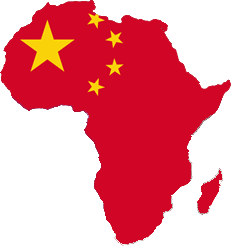
Is China just another imperialist power exploiting Africa’s resources?


China has had a long history of trade links and diplomatic relations with Africa and the Global South. However, modern political and economic ties only began during the Mao era. During the 1960’s there was a national liberalisation movement in Africa where the Chinese government sent experts abroad to promote the revolution. After the cold war ended, Africa became ever more important for China to increase trade since the Chinese needed to look towards countries other than USSR and US for natural resources that they required for industrialisation. On the other hand, Western countries during this period did not consider African countries of being important strategically. By the time of 2007, there were more than 750,000 Chinese nationals working in various African countries. Trade between the two countries has increased by approximately 700% since the 1990s and now, China is Africa’s third largest trading partner. It can be seen that the opening up of China and the recent development of Chinese-African trade relationship has caused China to be an increasing influence on Africa’s current political and economic atmosphere. As a result, this has caused many people to question whether or not China is just still acting in its old ways, generating imperialist power and exploiting others. 

Imperialism is defined as “the policy of extending the rule or authority of an empire or nation over foreign countries, or of acquiring and holding colonies and dependencies”. Furthermore exploitation is defined as “the fact of making use of a situation to gain unfair advantage for oneself. We can discuss whether or not China is just another imperialist power exploiting Africa’s resources based on these definitions.

It could be argued at China is indeed acting in an exploitative and extractive manner towards African countries where Chinese businesses are not working in partnership with African businesses, but in fact, in competition with them. From various research on international competitiveness of African goods and businesses, it is shown that African businesses are less efficient due to the lack of foreign capital, limited resources and inadequately educated workers. As a result, the increasing presence of more competitive Chinese firms is driving incumbent African business out of business. This can be seen in Africa’s textile industry which has dramatically deteriorated since the rise of power of Chinese firms within African countries. 

So is this a fair result? The answer appears unlikely, since there is a clear unequal balance of power between the Chinese and African countries, which suggests an imperialist act is occurring. We can turn towards some evidence of this behaviour to help us understand why this might be the case. Firstly, export taxes placed on African goods from China is very low for raw materials but extraordinarily high for manufactured goods, which discourages African businesses to take on the next stage of production of their goods since it is unlikely that they would be able to make a lot of profit from it. As a result, this de-values the goods that they produce and Chinese businesses who do manufacture the goods will be able to make a larger amount of profit. This case can be seen clearly for coffee beans and petroleum. Consequently, it can be seen that Chinese businesses have an unfair advantage due to the high tariff rates that are placed on certain African products. 

Furthermore, the “no strings attached” and “non-interference” concepts of Chinese trade policies and political agenda is questionable. It appears that although the government intend for these types of agreements, they are unlikely to be put into action, as a result the Chinese is acting in an imperialist manner, where they are indeed trying to extend their power and rule over Africa and its resources. For example, in the past, one of the conditions for trading with the Chinese was for the country to recognise that Taiwan is not a country in its own right. Furthermore, aid was given to Africa on the condition that certain business contracts were given to Chinese businesses. Not only that, the concept of Chinese non-inference has been violated, since interfering with African countries’ economics will undoubtedly result in the interference of politics. For example, in 2008, Chinese policy was softened to encourage Sudan to allow peacekeepers into their country. This was to show that China’s push to become a responsible economic player during the 2008 Olympics. As a result, trade is always interlinked with politics, and even though China may not necessarily state explicitly that they have political power over African countries, it appears that they do to a certain extent. And this is why people may consider China as being just another imperialist power, exploiting Africa’s resources for its own economic benefit. 
 
However, it could also be argued that there is a mutually benefiting relationship between the China and African countries, one which is not lopsided and only exploitative. It may be that Chinese and African businesses are working in partnership together to bring about a better economic outcome for all. One argument is that the increasing competition from Chinese firms in certain industries in Africa is not only able to attract more FDI but also is more effective in penetrating foreign markets through exports. As a result, the domestic competition and international integration with China is mutually reinforcing. It has been found that African firms that face higher competition at home have greater involvement in Chinese capital. There is a mutually reinforcing relationship which affects trade and investment on one hand and transfer of skills and technology on the other.  China has taken a large role in investing in projects to enhance infrastructure in Africa, for example, the Tazara Railway. This not only aids the transportation of goods and human capital for Chinese businesses but also will allow African businesses to take advantage of the improved infrastructure, which could offer huge opportunities to increase trade with other countries. 
 
It can be seen that China’s large involvement in African countries is not necessarily an exploitative and unfair relationship, and therefore one cannot firmly conclude that China intends to be another imperialist country even though, on the outskirts it appears to be the case. 


References:

Friday, 20 September 2013

Book: Life Lessons From the Monk Who Sold His Ferrari, Robin Sharma

Personal Review:
Life Lessons from the Monk Who Sold His Ferrari


This book was not the one that I had initially wanted to read, and I actually wanted to read the story not the lessons. However, this was not a bad pick. A lot of it is common sense and things that you already know so it can feel a little repetitive and tedious at times so I skipped some lessons out. But I liked that the book just gave me a quick reminder to continue to do this things which would make my life more fulfilling. It has a range of useful tips and suggestions. I also liked how the book is set out, whereby each key lesson is only a couple of pages long. A couple of lessons per day is very do-able. I would read this again as a reminder to myself of what is truly important in life.


Key Points:
  •   A journal is not a place to record events but a place to analyse and evaluate – can encourage consideration of what you do, why and what you have learnt. It gives a forum to study your past for a greater future.

  • Keep promises – don’t be a person of all talk and no action. Actions speak many words and creates trust and honest relationships. 
  • Mantras are very helpful – “Words that enlighten the soul are more precious that jewels.”
  • Schedule worry breaks – only allow yourself fixed times to worry and write down worries out of your worry breaks. Train yourself to leave troubles behind and do something more productive. Mark Twain; “Ive had a lot of trouble in my life, some of which actually happened.
  •  Few investments will yield a better return that time spent on physical fitness.

  •    “The person who tries to do everything ultimately achieves nothing”

  • Always carry a book – how high you will rise in life will be determined not by how hard you work but how well you think.  When you expose your mind to thoughts of the greatest people of the planet, your game improves, and you rise to a whole new level of wisdom.


  • Keep your cool. Words are like arrows; once released, they are impossible to retrieve. So choose yours with care.

  •  Train your focus and mind – a technique is every time your mind wanders from the page, make a checkmark. This will increase your awareness and awareness is the first step to change.

  • Setting goals and plans – “A clear plan relieves you of the torment of choice.”

  • Life is a self fulfilling prophecy – it gives you just about what you expect from it. Your thoughts form your world. “No pessimist ever discovered the stars or sailed to an enchanted land.” Most people do not really fail, they just give up trying. Most of limitations that hold you back from your dreams are self imposed.


  •  Be unconventional –“read every day something no one else s reading. Think something that no one else is thinking” being different for all the right reasons is a wise way to live. Look at Einstien, Picasso, Galileo.

·         
·         
·      

Inspiring Books

Lately, I have been reading a range of life guide/self help books. I like to read them because of three main reasons:

1) They remind me to appreciate the small things in life. 

2) They remind me to follow my heart and my passions

3) They remind me that I am enough.

In a nutshell, they help me feel better and to be more positive about life despite times of trouble and doubt. Being positive is such an important part of living a wholesome and healthy life, thus I am striving towards it.  To be honest, I am sure my Christian friends would just say, why don't you read the Bible? I've tried to read the Bible several times, but certain elements really do not touch me in the way that I feel it should. I have told myself to give it another serious try though. The thing is, the Bible doesn't touch everyone if you don't allow it in. Whereas, I have found that these life lesson books are very straight-forward, easy to absorb and makes a lot of sense; making you really want to follow the way of life that is outlined.

The books that I have been reading are considered as some of the books which you must read in your life. For example, The Alchemist, Tuesdays with Morrie, etc. Reviews and reflections of them shall come henceforth. I often read something inspiring and then I will forget it in due course, so in an attempt to learn and apply the lessons from my reading to my life, I shall blog the important points from the books.

Maybe you could also apply some of these points to your own life too!


Thursday, 19 September 2013

China: My Ningbo Summer School Experience


My Summer School experience at UNNC lasted for just two weeks. During these two weeks, I had one of most fun and mentally stimulating experiences I've ever had. I was fully immersed into the Chinese culture, surrounded by Mandarin speakers and learning about China's history, politics, society and economy every day, every hour, every minute. 

From the moment I stepped onto Chinese grounds, I knew that my prior thoughts about China were about to be changed. The Shanghai Pudong Airport welcomed me with a surprisingly spacious, clean and vibrant airport lounge, whilst I waited for the pick-up bus to UNNC. After 3 hours of waiting eagerly on the mini bus to arrive at Ningbo, we knew we were finally there as we passed the Chinese version of our Trent Building clock. We immediately had to attend a welcome meal at a restaurant inside the university with our fellow summer school colleagues and a couple of the lecturers from the business course. What a welcome meal it was! Around 40 students from the University of Nottingham as well as various other universities from across the globe gathered together to have a Chinese style dinner, where there were numerous different dishes to try.

We all knew that even 40 of us would not be able to finish the huge display of dishes, but this was just one of the aspects of the extravagant Chinese culture that we were about to experience. 

One of my first thoughts of my first day in China was that the people here are so welcoming and friendly. The Chinese students are very helpful and approachable so if we need any assistance with anything we can easily go and find them, also, the course conveners are very interested about all of us and wanted to hear about where we come from and what we study as well as what we want to learn about China. Not only that, all of the summer school students here are also very friendly since we are all here to meet new people. This all made me feel very comfortable although I was many miles away from home, I also felt very positive that my trip to China would be an unforgettable and wonderful one. 

The next day, I went to have breakfast with the students who were able to wake up early and some Chinese buddies. My breakfast only cost me 11 RMB


After breakfast, I had a campus tour and then an introduction lecture to the Summer School at a very posh building. One of the ex-premiers of China had given a speech in that room before! The focus of this lecture was on safety issues regarding China. I was quite surprised by some of the elements of this presentation since in the UK, even though we know that we should be careful on various issues such as crossing roads and fire alarms, it is quite different in China since they are still a relatively under developed country compared to the West. One of the aspects that I was particularly surprised about was that fire alarms are not fitted in every building at UNNC. Perhaps I was being naïve at that moment in time, but I did not expect that to be the case in UNNC, although I did expect it to be like that in other areas of China. 

We then had a buffet lunch at the Robin Hood restaurant on campus with all the students. It was at this time when we met the other people on our course. I was on the course called “China’s Encounter with the World”, and we had a small but cosy group. After lunch, we went to visit Tian Yi Library in the Ningbo city, this is one of the few private libraries in China and its history goes back 400 years. It was very pretty and elegant, however, I was a little disappointed when I learnt from the Chinese buddies that many “historical” buildings in China are in fact rebuilt and recreated. This is because many of their historical buildings were demolished during the Cultural Revolution in 1960s and also, many were not maintained well. 


The next day was Monday, and it was time for us to begin our lectures and seminars. I thought the day was so good! Firstly, we had some lectures on Chinese history including imperial China and Qing Dynasty. I thought that although these lectures were quite basic due to the time constraint, they were thoroughly interesting because I have always wanted to learn about the history of China since I have a Chinese background, with parents from Hong Kong


In the evening, we went to KTV (Karaoke TV). Karaoke in China is a very popular activity, where you can just pop in to have a sing when you have nothing to do. People of all ages are very good at singing and enjoy singing during their spare time. The Chinese buddies said that they like to come here at least once every two weeks, and you could see that they were so emotional when they sang their Chinese songs, whereas we summer school students were quite shy compared to them. Karaoke in China is very different to karaoke in UK since in UK you would go to a pub and sing old songs in front of a lot of people who you do not know. On the other hand, karaoke in China is with people you want to sing in front of, so people feel more comfortable whilst they sing and have a good time.


The next day was full of lectures, one of which was a video conference lecture on China’s use of soft power. Soft power is defined as the attractiveness of countries, as opposed to hard power which is military and force. It mainly consists of the use of persuasion in international relations as well as the promotion of a country’s ideas, cultures and values. Soft power is one of the main priorities of People’s Republic of China (PRC), whereby it has spent $9bn on it just this year. China’s main motivations for soft power are to create a stronger international presence and change the international perceptions of China, so that it can represent a more accurate picture of itself to the world. Perhaps this summer school in itself is an example of China's soft power. China’s display of soft power was clearly evident in the Shanghai Expo 2010 as well as the Beijing Olympics 2008, and is likely to be displayed even more in the future as China grows in power both economically and politically.

 
We went on a trip to Hangzhou the following day. This is the famous ancient city of China, it used to be the capital city of China during the Song dynasty. However, after that, emperors and its royal family still returned to Hangzhou for entertainment and relaxation. We watched a famous theatrical performance called “A Legend of Romance”, which I was told by the tour guide as one of the world’s top 3 drama performances.


Surprisingly, it lived up to my expectations and the reputation that it upholds. It was one of the most mesmerizing performances I have ever seen, with most beautiful traditional Chinese outfits, elegant dancing and high-tech stage props; making it so real that it was difficult to believe I had not actually time travelled a thousand years back to the Song dynasty. I really enjoyed this performance because it allowed me to experience what life was like in the royal family during the Song dynasty. I have watched many historical Chinese films and dramas which are set in the past, but none of these allowed me to really sense that I was actually inside that period as “A Legend of Romance” did.

The next few days followed with lectures and discussions on China’s politics and other controversial and hotly debated topics. One of the issues that we discussed was whether or not China is just another imperialist power exploiting Africa’s resources. China has had a long history of trade links and diplomatic relations with Africa and the Global South. However, after the cold war ended, Africa became ever more important for China to increase trade since the Chinese needed to look towards countries other than USSR and US for natural resources that they required for industrialisation. The recent development of Chinese-African trade relationship has caused China to be an increasing influence on Africa’s current political and economic atmosphere. It could be argued that China is acting in an exploitative manner towards African countries, however, it could also be argued that there is in fact a mutually benefiting relationship between the China and African. 

During that weekend, I decided to stay in Ningbo to venture the local areas with a few other students. We visited the Tianyi Square in Ningbo city centre, which is one of the main shopping districts in Ningbo. 


I was surprised by the large number of international chain stores that were present; however, we also had the chance to go shopping in a traditional market area. I preferred this much more to the large chain stores since they can also be found in London, whereas these small cheap boutique style shops were unique to China. They were located near a temple area with traditional Chinese style buildings. 


 People were everywhere, haggling to each other, trying on shoes and bags; the atmosphere felt really vibrant and displayed that this area was the “hustle and bustle” of Ningbo. I thoroughly enjoyed the experience of haggling because I was able to practice my mandarin skills as well as gaining a discount from the prices that the sellers set. In UK, there are not any opportunities for people to bargain and haggle whilst shopping so I thought this was a fun yet unusual experience.

A few days later, everyone had to attend an International Student Festival at a high class hotel restaurant which was organised by the Municipal Government of Ningbo. Some of the Nottingham students performed songs and dances and students from all over the world such as America, Australia, Bangladesh, etc., also displayed their artistic skills. Of course, there was a large range of delicious food. The next day of the International Student Festival, I had to do a speech based on the topic of how university students face up to the challenges of globalisation, to other international students and their teachers.


I firstly explained the definition of globalisation, and then went on to discuss the effects of globalisation on specifically, university education systems across the world. It was a great opportunity for me to develop my presentation skills and speaking to a large crowd, despite being such as shorty and almost not being tall enough to see my notes!

On the last day of summer school, we went on a trip around the outskirts of Ningbo, which was also organised by the Municipal Government of Ningbo. It was a great opportunity to experience what life is like in China’s countryside. We visited various temples as well as a boat trip


The atmosphere was really something that I will not forget in many years to come. It was so peaceful and the scenery was beautiful, not the mention the sun was shining on full blast the whole day. After, we went to a traditional Ningbonese restaurant to have our farewell dinner and the day ended with some drinks with the Chinese buddies by the lake back at campus. 

Summer school at Ningbo has provided me with an experience that I am certain I will not forget. I have learned and gained a lot from being in China and being able to see first-hand what life is like as a Chinese student. Not only have I been able to see a lot, I have also been able to make international friends of whom I am sure I will make effort to see again in the future. In fact, many of them are coming to Nottingham to do a year abroad! I can't wait to meet up with them. I thank University of Nottingham for giving me this opportunity and the scholarship to fund my travels, for I am sure that had I not received this scholarship, I would not have been able to explore China as I did during summer school this year.